

Published: 15 January 2026 | Last updated: 20 February 2026
This article was written by Sarah Jenkins, a UK immigration expert with 10 years of experience advising on digital travel authorisations and residence permits. All information reflects UK immigration policy as of March 2026. The transition from physical BRP to eVisa was completed in early 2025, and the eTA system has been fully operational since 2024.
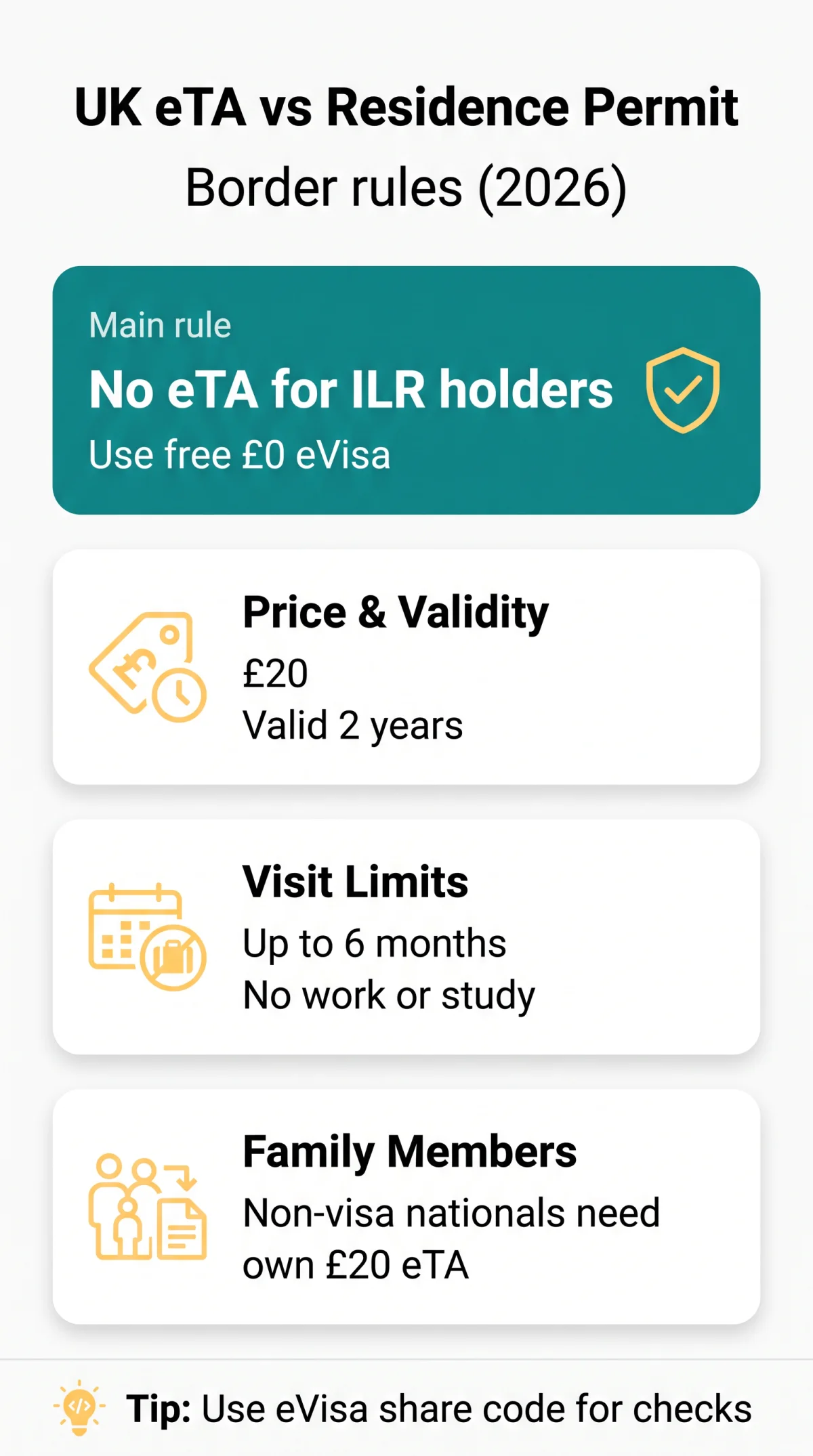
When comparing a UK eTA vs residence permit, the rule is simple: holders of a valid UK residence permit, Indefinite Leave to Remain (ILR), or settled status do not need a UK eTA. The £20 eTA is exclusively for non-visa nationals without existing UK immigration permission. In 2026, residents use their free £0 digital eVisa to prove their exemption at the border.
What Is the UK eTA? and UK Residence Permits Explained
The UK Electronic Travel Authorisation (ETA) is a £20 digital travel permission valid for 2 years or until the holder’s passport expires. You apply via the UK ETA app or online. Decisions are usually automatic or take up to 3 working days. If refused, there is no right of appeal; applicants must apply for a Standard Visitor Visa instead.
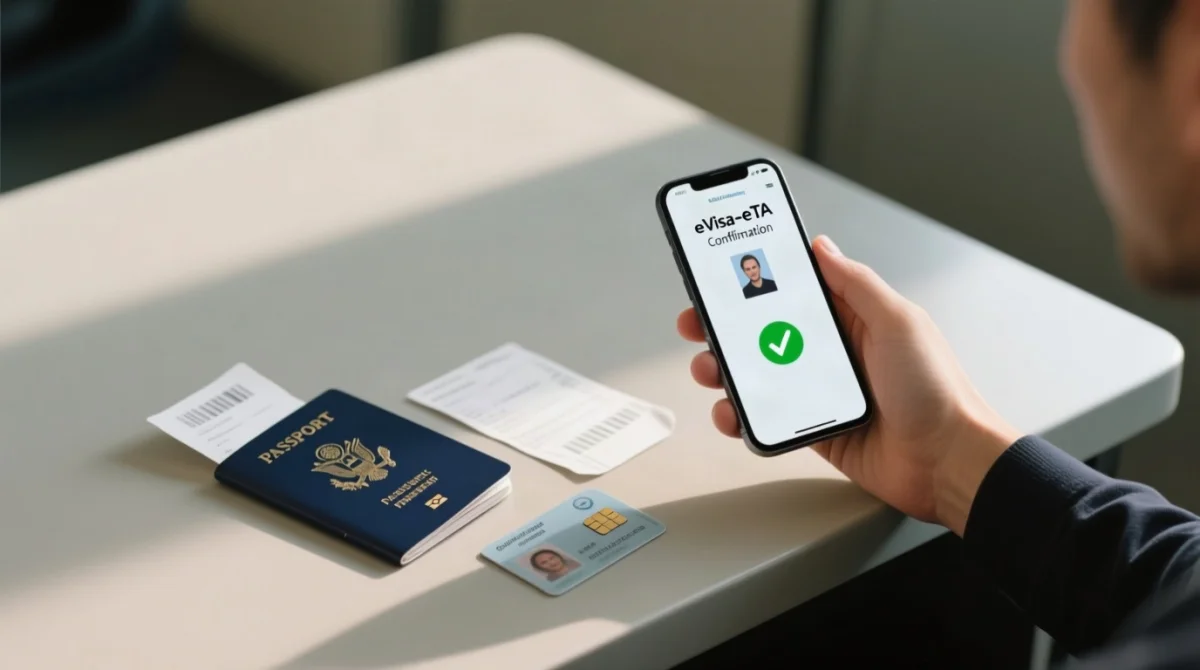
The eTA only permits short visits up to 6 months and grants no work or study rights. Conversely, UK residence permits grant specific work, study, and settlement rights. Because physical Biometric Residence Permits (BRPs) expired on 31 December 2024, residents entering in 2026 rely on eVisas and can usually use e-gates.
Do I Need a UK eTA If I Already Hold a Residence Permit or ILR?
Holders of valid UK immigration permission, including visas, Indefinite Leave to Remain (ILR), or settled status, are fully exempt from the UK eTA requirement. The UK eTA is only for non-visa nationals with no existing UK permission.
| Immigration Product | UK eTA Required? |
|---|---|
| Indefinite Leave to Remain (ILR) | No |
| eVisa / Settled Status (EUSS) | No |
| Skilled Worker / Student Visa | No |
| British and Irish Citizens | No |
| Common Travel Area (CTA) Residents | No |
| Family members without own status | Yes |
Family Member Rules
Family members do not inherit the ILR holder’s eTA exemption. Each non-visa national must obtain their own £20 eTA before traveling. Example: Maria, a Brazilian national married to a UK settled person, applied for an eTA before visiting her husband. She was correctly advised that her own eTA was required because she did not hold settled status herself.
Can I Enter the UK with a Residence Permit Instead of an eTA?
Residence permit and Indefinite Leave to Remain holders present their eVisa share code or passport vignette at the border. The UK eTA is not required and is never accepted as a substitute for a UK residence permit. Most UK residence permit holders can use e-gates for automated entry.
International carriers verify your permission to enter through automated digital checks. If airline systems fail to verify digital status, passengers undergo manual verification using a share code generated via www.gov.uk/eVisa. For old ILR ink stamps, residents can make a free £0 No Time Limit (NTL) application to upgrade to an eVisa. Legal residents of Ireland travelling within the Common Travel Area follow specific internal journey rules and remain exempt.
Erroneous eTA Application and Tricky Travel Situations
An erroneous UK eTA application does not invalidate an existing Indefinite Leave to Remain (ILR), but traveling on a UK eTA abandons pending visa extensions and cannot revive a lapsed ILR.
- Accidental Application: The £20 fee is non-refundable for exempt applicants, but a mistaken eTA application does not override a valid residence permit.
- Section 3C Leave: Traveling on a UK eTA automatically abandons any pending in-country visa or ILR extension applications.
- Lapsed ILR: A UK eTA cannot revive an ILR lost due to an absence of over 2 years. In 2026, affected individuals must apply for a Returning Resident visa instead.
- In-Country Switching: The UK eTA strictly restricts holders from switching to a work or family residence permit from within the UK.
Sources: UK Immigration Rules Appendix V (Visitor), Appendix Electronic Travel Authorisation; Home Office guidance on eVisa (2025). For the government rules, see the Home Office guidance: www.gov.uk/eta.
Frequently Asked Questions (FAQ)
What is the difference between a UK eTA and a residence permit?
A UK eTA is a £20 digital permission for short visits up to 6 months, granting no work or study rights. A residence permit grants specific rights to live, work, and study in the UK.
Do I need an ETA if I am a permanent resident with ILR?
No. Indefinite Leave to Remain (ILR) holders are exempt. In 2026, you prove your status using a digital eVisa linked to your UKVI account or a valid vignette.
My partner has settled status in the UK – do I need an eTA to visit them?
Yes. Family members do not inherit the eTA exemption. Non-visa nationals visiting a partner must apply for their own £20 eTA.
I am exempt but paid for an eTA by mistake – can I get a refund?
No. The Home Office does not refund the fee, but a mistaken application does not invalidate your existing leave.
Is a UK visa and an ETA the same thing?
No. The Electronic Travel Authorisation (ETA) is a digital permission to travel, not a visa. It does not guarantee entry at the border.
Can I use my UK residence permit to travel to Europe without an eTA?
Your UK residence permit only governs your immigration status within the United Kingdom. For European travel, you must check the destination country’s specific entry rules.
What should I do if my eVisa is not recognised at the e-gates?
You must rely on manual verification by presenting your eVisa share code to border officers or airline staff.
Do I need an ETA for the UK if I have an expired BRP from before 2025?
No. The BRP expired on 31 December 2024. In 2026, you must prove your status using a digital eVisa linked to your UKVI account.